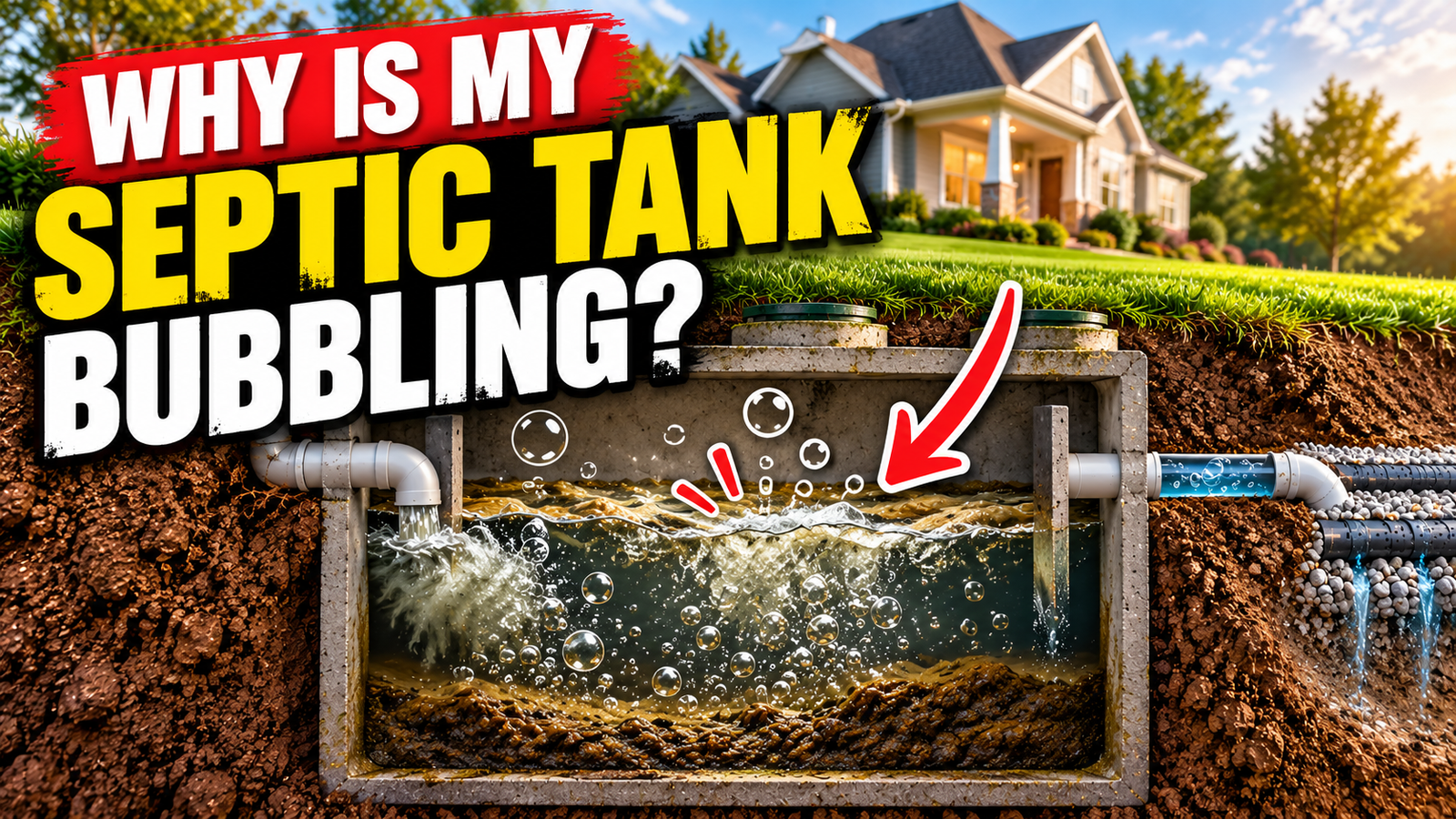
Septic tanks are complex biological systems designed to break down domestic wastewater. However, certain substances can disrupt this delicate process, and one of the most significant threats is Fats, Oils, and Grease (FOG). When FOG enters a septic tank, it floats to the surface and forms a hard, impenetrable layer known as Solidified Grease & Scum Layer. If left unmanaged, this layer reduces the tank’s active volume, blocks baffles, and can eventually flow into and clog the Drain Field, leading to a system-wide catastrophe. This article details a comprehensive, multi-part strategy to dissolve existing grease, enhance biological digestion, and prevent its return.
Understanding the FOG Threat
To effectively combat grease, you must first understand the damage it inflicts. FOG enters the septic system through kitchen drains, often from cooking waste, dishwashing, and food particles. Unlike other waste, FOG is not easily biodegradable. It solidifies upon cooling and coalesces into a persistent scum layer.
This “Solidified Grease” layer has several critical impacts:
- Hydraulic Blockage: It can create a physical blockage at the inlet and outlet baffles, preventing the proper flow of wastewater into the tank or treated effluent out to the Drain Field.
- Reduced Treatment Volume: The scum occupies valuable space, forcing the wastewater through the system faster and reducing the “resting time” necessary for biological treatment to occur.
- Drain Field Failure: The ultimate danger is grease escaping the tank and flowing into the Drain Field. Once there, it coats the soil and gravel, forming a waterproof mat (biomat) that prevents the field from absorbing water. This leads to complete Drain Field clogging and catastrophic failure, which is a massive and expensive repair.
A multi-part approach—biological, physical, and preventive—is required to protect your system.

Part 1: Eliminating Existing Grease
If your system is already suffering from grease buildup, proactive steps are needed to physically dissolve and digest the accumulation.
Step 1: Chemical and Biological Dissolution (Breakdown)
The first step in a grease elimination protocol is to physically break down the solidified FOG layer. This cannot be achieved with standard household cleaners. You must use a specialized, Natural Grease Dissolver or a concentrated enzyme/solvent hybrid product designed for this task.
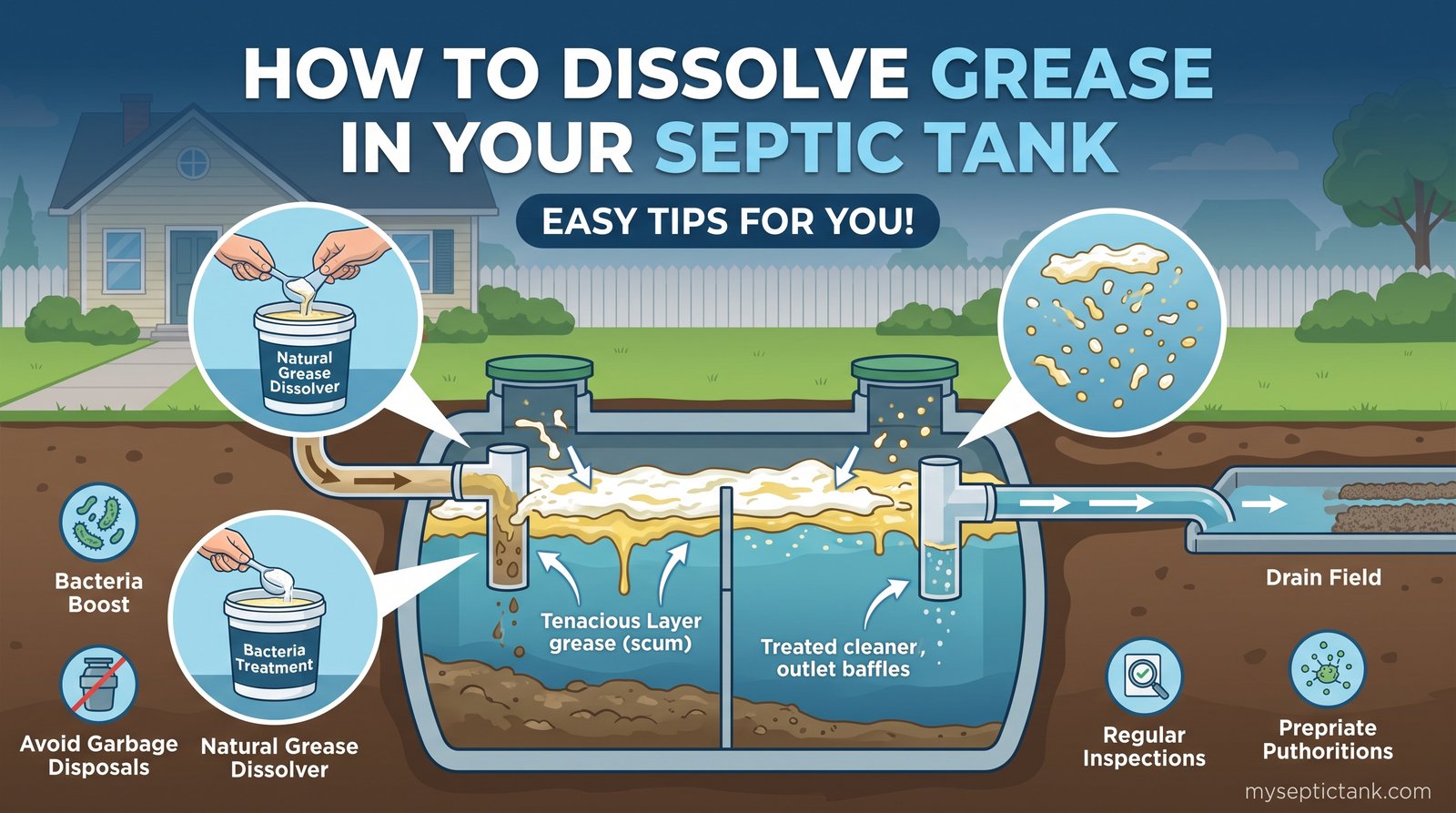
This product is introduced directly into the septic tank, typically through a clean-out port or a central access port, rather than down a household drain. The dissolver penetrates the solidified grease, breaking the long-chain hydrocarbon molecules and fracturing the physical mass. This initial breakdown stage makes the grease accessible for subsequent steps.
Step 2: Enhanced Biological Digestion (Bacteria Boost)
Once the solidified grease is broken down into smaller particles, it needs to be consumed. Standard septic bacteria cannot digest massive, compact FOG masses. You must now introduce a powerful Bacteria Boost or Enhanced Digestion Treatment.
This treatment provides a massive influx of specialized bacterial cultures selected specifically for their aggressive FOG-digesting capabilities. Following the initial dissolution, these bacteria latch onto the newly accessible grease particles and consume them, converting the FOG into simpler, harmless byproducts. The synergy between the physical breakdown and the enhanced biological digestion is crucial; one without the other is rarely successful for severe grease problems. The bacteria consume the dissolved effluent, preventing it from re-solidifying or flowing to the Drain Field.
Part 2: Proactive Grease Prevention (FOG-Free Living)
Eliminating existing grease is only the first part of the strategy. Preventing its return is the foundation of long-term septic health. Prevention means FOG-free living.
Eliminate FOG at the Source
The best way to prevent grease buildup is to stop it from entering your septic system. Grease does not belong in your plumbing. Adopt these habits:
- Scrape plates relentlessly: Use a rubber spatula to scrape all food waste, oils, and grease from dishes and cookware into a trash bin before rinsing them in the sink.
- Contain the grease: Use grease collection containers (such as an empty coffee can or glass jar) to collect cooking oils and fats. Dispose of the container in the trash once it is full.
- Minimize plate rinsing: If plates must be rinsed, minimize the time and water volume, and never use extremely hot water, which melts the grease and allows it to travel deeper into the plumbing system before solidifying.
The Garbage Disposal Myth
A critical and often dangerous misconception is that a garbage disposal helps with grease. The truth is quite the opposite. Avoid Garbage Disposals in a septic environment.
A garbage disposal grinds food and grease into fine particles, mixing them with water to create a FOG-rich slurry. This slurry flows to the septic tank, where it is much harder for the bacteria to separate and treat. Using a garbage disposal can accelerate the growth of the tenacious scum layer, overload the biological system, and significantly shorten the time between necessary pumpings. You cannot “grind away” grease problems.
Part 3: Ongoing System Management
Long-term septic health requires active, ongoing management beyond biological treatments and source control.
Regular Professional Inspections
The primary ongoing management tool is a Regular Inspection by a certified septic professional. Schedule inspections every 3 to 5 years, though this can vary based on local regulations, tank size, and household usage.
A professional inspection is not just a visual check. The technician will measure the precise thickness of the scum layer (FOG) and the sludge layer to determine when the tank is full. They also ensure the crucial Inlet and Outlet Baffles are clear and that the tank is structurally sound. A healthy septic system with clear baffles and a thin scum layer ensures treated effluent can safely distribute to the Drain Field.
Scheduled Proper Pumping
An inspection tells you when to pump; proper pumping is how you physically maintain the system’s capacity. When an inspection reveals that the combined thickness of the scum and sludge layers occupies too much of the tank’s active volume (a rule of thumb is 1/3 of the volume), you must schedule a full tank pump-out.
This is a Scheduled Pumping procedure, meaning the pumper will remove all necessary waste—including the entire floating scum layer, the entire sludge layer, and most of the wastewater. It is crucial not to leave residual sludge or grease behind, as this can immediately seed new grease buildup and inhibit healthy biological activity. A fresh pump-out gives your septic system a “reset,” ensuring maximum volume and capacity for treatment.
By combining biological management (dissolution and boosts), proactive source control (eliminating FOG, avoiding disposals), and professional physical management (inspections and proper pumping), you can maintain a FOG-free, healthy, and long-lasting septic system.