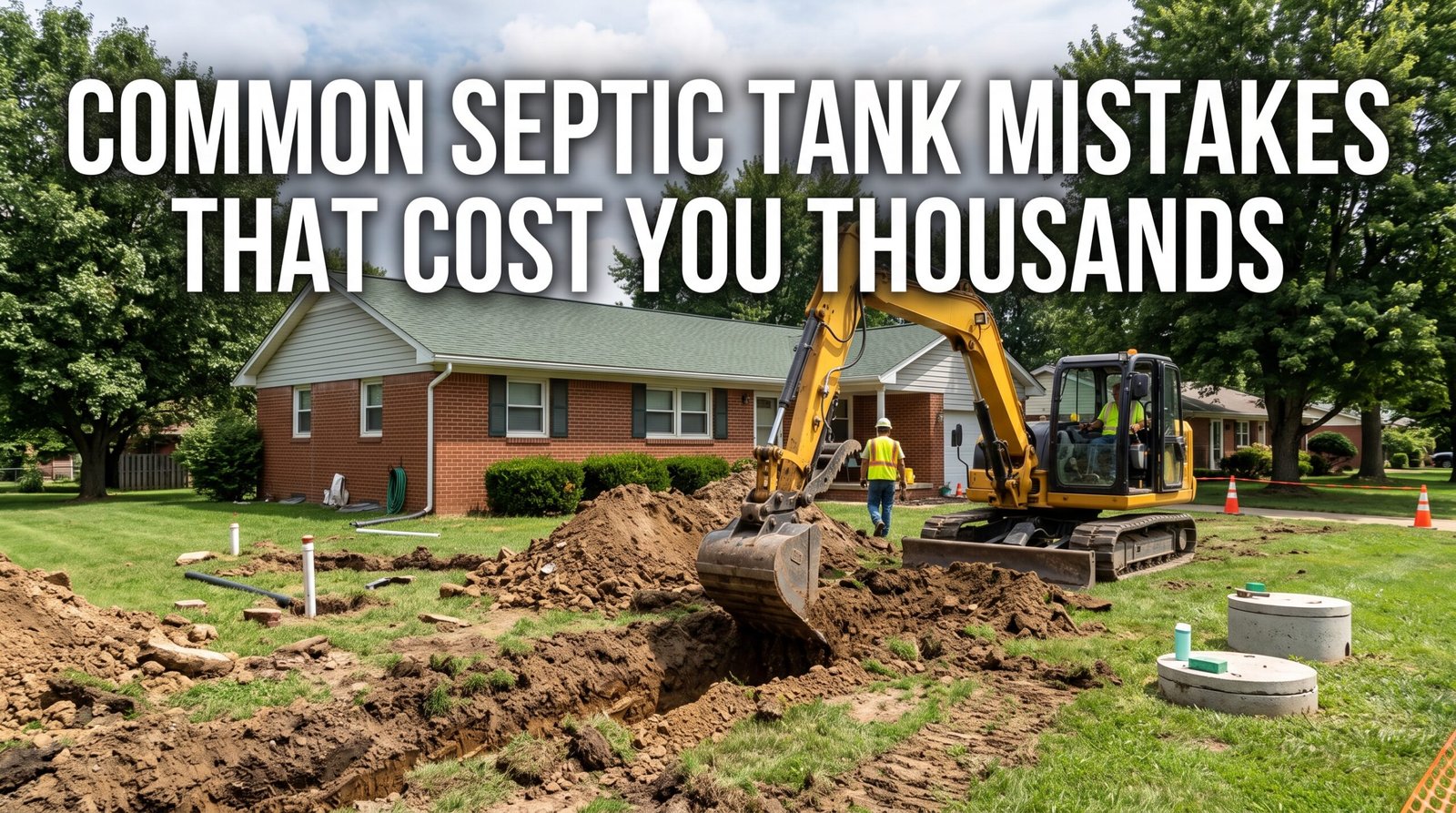
Flushing non-biodegradable items, fats, and harsh chemicals is the leading cause of premature septic system failure, often resulting in drain field replacements that cost between $10,000 and $20,000. To protect your property and ensure your septic system lasts for decades, you must strictly follow the “3 P’s Rule” (Pee, Poo, and toilet Paper) and permanently ban specific household products from your drains.
Quick Facts: Septic System Failure & Prevention
- Average Drain Field Replacement Cost: $10,000 to $20,000.
- Primary Cause of Blockages: So-called “flushable” wipes and cooking grease.
- The “3 P’s” Golden Rule: Only flush Pee, Poo, and Toilet Paper.
- Bacterial Health Limit: A septic tank requires a neutral pH and a thriving anaerobic bacteria population to break down solids.
Here is the definitive checklist of seven innocent-looking items that will silently destroy your septic system, and exactly why they are so dangerous.
1. “Flushable” Wipes (The Industry’s Biggest Lie)
Never flush any brand of wet wipes, even if the packaging explicitly claims they are “septic safe” or “flushable.” While these wipes might successfully clear your toilet bowl, they do not dissolve in water like standard toilet paper. Instead, they weave together with hair and grease inside your plumbing to form massive, impenetrable clogs that block the tank’s inlet baffle and cause raw sewage to back up into your bathtubs.
2. F.O.G. (Fats, Oils, and Grease)
Pouring warm bacon grease, cooking oil, or heavy butter down the kitchen sink is a guaranteed way to ruin your system. When warm grease enters the cool environment of buried sewer pipes, it solidifies into a hard, cement-like block. Even if it reaches the tank, grease adds to the heavy “scum layer” at the top, which cannot be broken down by aquatic bacteria and will eventually spill over into your delicate drain field.
3. Liquid Fabric Softener
Liquid fabric softeners contain quaternary ammonium compounds and heavy synthetic lipids (fats). These ingredients are highly toxic to the beneficial bacteria inside your septic tank. Furthermore, the oily residue from fabric softeners passes through the tank and coats the perforated pipes and soil in your drain field, sealing the soil pores and preventing water from absorbing into the ground.
4. Antibacterial Hand Soaps and Bleach
A septic tank is a living biological reactor. Pouring concentrated bleach, heavy-duty chemical drain openers, or frequently washing with antibacterial soap kills the essential microorganisms that digest solid human waste. When the bacteria die, the tank fills with raw sludge at an accelerated rate, forcing you to pay for expensive pump-outs much more frequently.
5. Coffee Grounds
Unlike most organic food waste, coffee grounds are highly acidic and do not break down in a septic environment. Because they are heavy, they immediately sink to the bottom of the tank, rapidly thickening the sludge layer. Over time, a daily habit of washing grounds down the sink will drastically reduce the liquid capacity of your tank.
6. Feminine Hygiene Products and Diapers
Tampons, sanitary pads, and diapers are engineered with synthetic super-absorbent polymers designed to expand when exposed to liquid. Flushing these items will cause them to swell inside your 4-inch sewer pipes, creating an immediate and severe blockage that usually requires a professional plumber with a mechanical auger to remove.
7. Cat Litter (Even “Flushable” Brands)
Cat litter is primarily made of bentonite clay, which is designed to clump into solid, rock-hard masses when wet. Flushing cat litter essentially adds liquid cement to your septic tank. Even natural or biodegradable litters introduce animal waste pathogens that septic systems are not designed to process safely.
Safe Swaps: What to Use Instead
To keep your plumbing clear and your septic bacteria thriving, replace hazardous household items with these septic-safe alternatives.
| Dangerous Item | The Septic-Safe Alternative | Why It Works Better |
| Bleach & Chemical Cleaners | White Vinegar & Baking Soda | Cleans and deodorizes without killing essential tank bacteria. |
| “Flushable” Wipes | Bidet Attachment & Toilet Paper | Provides a superior clean with zero risk of plumbing blockages. |
| Liquid Fabric Softener | Wool Dryer Balls | Eliminates static and softens clothes without leaving oily residue in the drain field. |
| Chemical Drain Openers | Mechanical Plunger or Drain Snake | Clears physical clogs without introducing caustic, pipe-eating chemicals. |
| Cooking Grease down sink | Glass jar in the refrigerator | Allows grease to solidify so it can be safely thrown in the solid trash. |
Maintaining a septic system does not require expensive additives or complex maintenance routines. By keeping these seven destructive items out of your drains, you are actively protecting your bacterial ecosystem and saving yourself from a devastating backyard disaster.