A septic system stays reliable when you control water use, keep inappropriate waste out of the plumbing, and arrange professional care. Nearly one in five U.S. homes use septic systems, so upkeep is a normal part of caring for a home. Good habits can help protect your household’s health, your property, and the environment before trouble appears.
You do not need to manage every part of the system yourself. Routine professional care, paired with a few steady household habits, makes septic tank upkeep a manageable part of home care. Knowing where your system is and when it was last serviced gives you a useful starting point.

Key Takeaways
- Keep a record of inspections, pumping, and repairs.
- Use water efficiently and spread heavy water use across the week.
- Keep trash and harmful materials out of household drains.
- Protect buried system parts from vehicles, roots, and runoff.
- Contact a septic professional when wastewater backs up or surfaces outdoors.
How Does a Septic System Work?
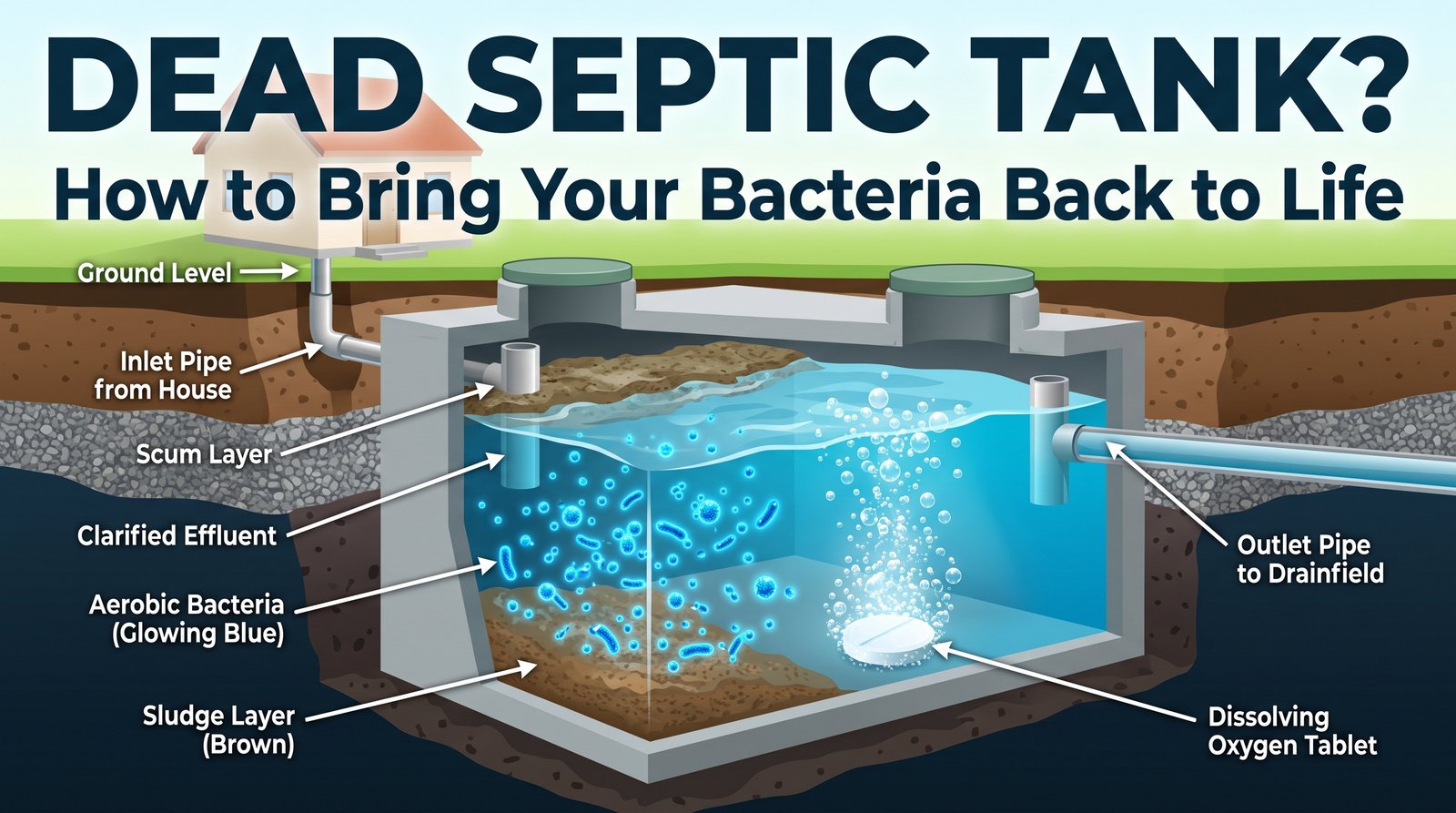
Household wastewater first enters the septic tank, where solids separate from liquid before wastewater continues toward the drainfield. The drainfield is the soil absorption area that receives wastewater from the tank for further treatment. A conventional septic system also has a distribution box between the tank and the drainfield.
The tank holds settled sludge and floating scum back from the drainfield. That separation protects the soil treatment area, which depends on open paths for wastewater to soak into the ground. A working septic tank is not supposed to be empty.

What happens inside the septic tank
Wastewater enters the tank from household plumbing. Heavy solids settle at the bottom and form sludge, while grease and oils rise to form scum. The liquid layer stays between them.
The tank gives solids time to settle or float before liquid moves onward. A properly working tank contains both sludge and scum. You should not mistake those layers for a sign that the tank needs to be emptied completely.
The tank is designed to retain sludge and scum so they do not migrate into the drainfield.
How the drainfield treats wastewater
Liquid wastewater leaves the tank and reaches a distribution box. This box spreads the flow among pipes in the drainfield, also called a leach field.
Wastewater then moves through the pipes and into the surrounding soil. Soil helps treat it as it moves downward. The drainfield needs to accept wastewater at a steady rate for that process to work well.
When solids escape the tank, they can clog pipes or soil openings. Keeping solids out of the drainfield helps preserve its ability to receive and treat wastewater.
Keeping sludge and scum in the tank helps prevent solids from reaching and damaging the drainfield.
Septic Tank Upkeep: When Should You Inspect and Pump?
For many homes, a professional inspection and pumping are typically due every 3 to 5 years, with the interval adjusted to household use and tank findings. Tank findings matter because sludge and scum build up at different rates. In 2024, the U.S. EPA described that range as typical for septic systems.
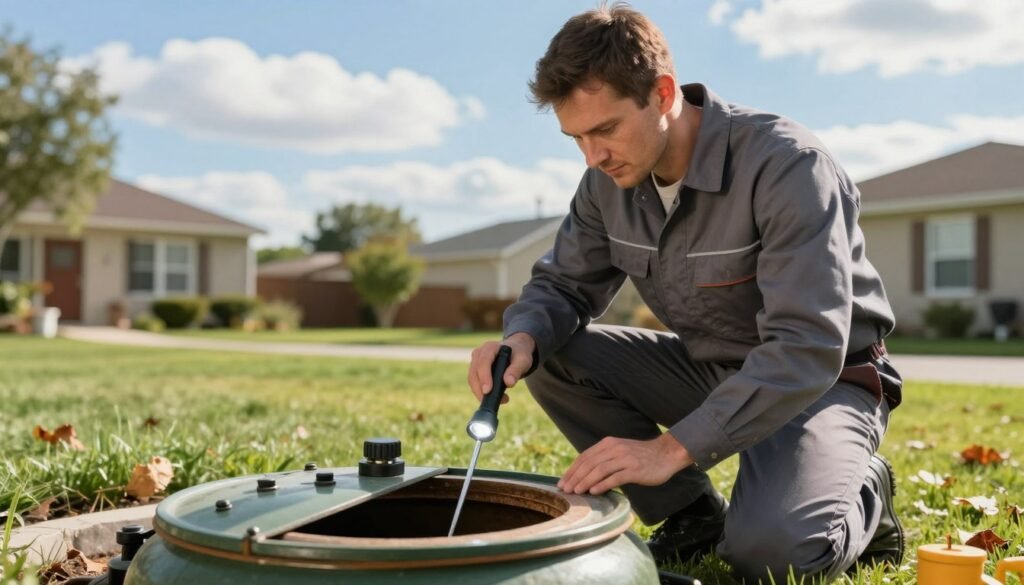
Have a trained professional inspect the system and measure its sludge and scum. A service visit can help you decide whether the tank needs pumping, rather than relying on a calendar alone.
Set an inspection and pumping schedule
Your septic tank maintenance schedule depends in part on household size and how quickly sludge and scum accumulate. More people using the system can mean more wastewater and solids. In 2024, the EPA advised inspections and pumping every 3 to 5 years in typical cases, based on those factors.
Advanced systems with electrical float switches, pumps, or other mechanical parts may need more frequent inspections. Follow the septic-system manufacturer’s guidelines for service. Your installer or service provider can help identify the system type and its care instructions.
Regular pumping removes accumulated solids when inspection results show it is needed. It is not a substitute for inspection, since a professional also checks the tank and its parts. Keep both tasks in your maintenance plan.
Keep a service record and find a local professional
A simple septic system maintenance checklist helps you track work and share useful details with a technician. Keep these records with your home documents, or store clear copies where you can find them during a service call.
- Sketch the system location, including the tank and drainfield.
- Record each inspection date.
- Record each pumping date.
- Save sludge and scum readings from inspections.
- List repairs completed and the date of each repair.
To find septic tank pumping near your home, check local professional directories. Confirm the provider’s qualifications and ask for a service report that records the work and findings.
For local cleaning or pumping in Maine, review septic tank cleaning in Lewiston as one example of a service listing. Use the same care when choosing any provider in your area.
Use inspection results to decide when to pump
A technician can use measurements to judge when a tank needs pumping. Pumping is recommended if the bottom of the scum layer is within 6 inches of the outlet, or if the top of the sludge layer is within 12 inches of it.
Pumping is also recommended when sludge and scum together take up more than 25 percent of the liquid depth. These checks help connect the tank’s actual condition to the service decision.
Never enter a septic tank or lean into an open tank, since its gases can be fatal within minutes.
How Can You Reduce Water Use at Home?
A running toilet can send as much as 200 gallons of extra water into your septic system in a day. That extra flow can place a sudden load on the system. Every gallon that goes down a household drain reaches the tank and then the drainfield.
Fix leaks, use efficient fixtures, and spread heavy water use across the week. Indoor water use in a typical single-family home can reach 70 gallons per person per day. Reducing waste helps limit the volume the system must handle.
Fix leaks and choose efficient fixtures
Toilets account for 25 to 30 percent of household water use, so a running toilet deserves prompt attention. A high-efficiency toilet uses 1.6 gallons or less per flush. Older toilets can use 3.5 to 5 gallons per flush.
Check faucets, toilets, and other plumbing for leaks. A slow drip may seem minor, but ongoing water loss adds up. Replacing an older fixture with an efficient model can also reduce the water sent to the system.
ENERGY STAR clothes washers use 35 percent less energy and 50 percent less water than standard models. Run full loads in the washer and dishwasher when practical. These simple choices can lower water use without changing how you care for the home.
Spread laundry and other heavy water use
Several large loads in a short period can send wastewater into the system faster than the soil can accept it. Spread laundry throughout the week instead of doing it all in one day. This helps avoid excessive hydraulic demand at once.
Watch for other activities that use a lot of water, such as long showers or several appliances running together. You do not need to stop normal household use. Aim for a steadier flow rather than a sudden surge.
| Water-use source | Higher-load pattern | Lower-load choice |
|---|---|---|
| Toilet use | Running toilet | Repair the leak |
| Leaks | Dripping faucet left unfixed | Repair faucets promptly |
| Laundry | Many loads in one day | Spread loads across the week |
| Roof or yard runoff | Gutters drain near the field | Route runoff away from the field |
Simple septic tank care for dummies
A septic tank care for dummies routine can start with three simple checks. Notice water waste, avoid several high-volume activities at once, and follow your system manufacturer’s guidance. These steps help manage household water without special tools.
In 2024, the EPA advised efficient water use and keeping gutters and sump-pump discharge away from the drainfield. A little attention to water flow inside and outside the home can reduce stress on the system.
Space high-water activities across the week rather than sending several large loads through the system at once.
What Should Never Go Down the Drain?
Treat toilets and sinks as wastewater fixtures, not as household trash cans. Everything sent down a drain reaches the septic system, including items that do not break down in the tank.
Flush only human waste and toilet paper. Wipes, food scraps, grease, and harmful chemicals can create trouble in pipes or add solids the tank must hold.
Use the table to choose a safer route for common household items. Local rules may set special disposal options for certain products or chemicals.
| Item | Safer disposal route | Why to keep it out |
|---|---|---|
| Wipes and paper towels | Household trash | They do not break down like toilet paper |
| Coffee grounds | Trash or compost | They add solids to the system |
| Cooking grease and oil | Cool, then place in a trash container | Grease can clog pipes and build up |
| Nondegradable hygiene products | Household trash | They can block pipes or tank parts |
Put cooking grease in a container for disposal in the trash. Do not pour it into a sink, even with hot water. Grease can cool farther along the plumbing and stick to pipe walls.
A garbage disposal adds food solids to wastewater. It can increase how often the tank needs pumping, so eliminate its use or limit it. Scraping food into the trash or compost keeps those scraps out of the plumbing.
Hazardous household chemicals need the right local disposal route, not a drain. Check your local waste service for instructions on items such as paint, solvents, and other harmful products. Do not assume the tank can safely treat them.
Put paper towels and wipes in the trash even when a package describes a wipe as flushable.
Do Septic Tank Additives Break Down Solids?
You do not need to pour a product into a domestic septic tank to supply the microorganisms it needs. Natural microorganisms already help process waste inside the tank.
The U.S. EPA did not recommend bacterial or chemical additives for domestic septic systems in 2024. Additives may interfere with waste breakdown, contribute to clogging, or contaminate groundwater and nearby waters.
Products that claim to break down solids are not a routine replacement for professional inspection and pumping. Sludge and scum still build up in a working tank, even as microorganisms process some organic waste.
If you are deciding what to put in a septic tank to break down solids, use no additive as a routine treatment. Professional care addresses accumulated material and lets a trained person check the tank’s condition.
Household wastewater treatment depends on the tank, pipes, and soil working together. A chemical shortcut cannot confirm that each part works well. Do not treat a product label as proof that the system needs no service.
The market includes products sold as septic treatments, such as SEPTIFIX septic tank treatment. Read product information as a separate matter, not as a substitute for routine care.
Do not use an additive as a response to a backup or slow drain, since it cannot diagnose or reliably clear the underlying problem.
How Do You Protect the Tank and Drainfield?
Protect the tank and drainfield from weight, roots, and runoff that can interfere with wastewater treatment. Buried parts need space and protection from pressure, as well as a path for water to move through the soil.
Keep vehicles and heavy equipment off the tank and drainfield. Their weight can damage buried parts or compact soil. The surface above the field should stay open for treatment and access.

Keep roots, vehicles, and structures away
Tree and shrub roots can enter pipes and clog them. Grass or suitable ground cover is generally a better choice over the drainfield. Ask before changing plantings, since roots can spread beyond the visible canopy.
Do not build over the drainfield without checking with the local designer or permitting authority. A deck, shed, or other structure may block access and affect the soil area. Keep heavy equipment away from both the field and tank.
A septic tank lasts an average of 20 to 40 years. Concrete tanks average around 40 years, while steel tanks are prone to rust and corrosion. Material and condition both matter when you plan for long-term property care.
Control rainwater and surface runoff
Keep roof drains, gutters, sump-pump discharge, and other surface water away from the drainfield. Extra water can saturate soil and make it harder for wastewater to soak in. Trace runoff after rain to see where it flows.
A quick walk around the property can help you spot issues early. Use this four-point check as seasons and yard work change the area:
- Look for vehicle access over tank or drainfield areas.
- Check trees, shrubs, and other planting near the drainfield.
- Trace where roof runoff and gutter water go.
- Confirm the tank location is marked and easy to find.
In 2026, typical septic tanks were described as lasting 20 to 40 years, with concrete tanks averaging around 40 years and steel tanks prone to corrosion. Tank material and lifespan can help frame your maintenance plans, but an inspection tells you about a specific tank.
Ask a septic professional about safe planting distance because root risk depends on the system’s location and landscape.
What Are the Warning Signs of Septic Failure?
Slow drains, sewage odors, or wet ground near the tank can signal a problem that needs prompt assessment. One sign alone does not show which part has failed, but several changes deserve attention.
Reduce water use and call a septic professional when sewage backs up or wastewater surfaces outdoors. A prompt check can help limit contact with sewage and identify the cause.
Recognize changes in household plumbing and yard conditions
Watch for these five possible warning signs. Note where they occur and when they began, so you can describe the change clearly during a service call.
- Slow drains in sinks, tubs, or other fixtures.
- Toilets that flush slowly.
- Sewage backup into sinks, tubs, or toilets.
- Foul odors inside or outside the home.
- Wet ground near the tank area.
A single slow drain may point to a restriction in a household plumbing line. Problems that affect several fixtures can involve a pipe leading to the tank, the tank outlet, or the drainfield. A professional can assess where wastewater stops moving as it should.
Understand why a backup can happen
A backup may result from a restricted pipe leading to the tank, a restricted tank outlet, or a drainfield that cannot accept wastewater. Too much wastewater arriving quickly can also overwhelm the field.
Saturated soil can limit how much wastewater the drainfield takes in. Excess solids reaching the field can also interfere with treatment. These causes can look similar at home, so diagnosis should not rely on one symptom alone.
Excessive wastewater can flood a drainfield and send sewage to the surface or back into toilets and sinks. Pumping removes accumulated sludge and scum, but it does not necessarily clear a blocked pipe leading to the tank.
Reduce water use while you arrange professional help if the system seems strained. Do not assume pumping alone will fix a restriction or a drainfield problem. The cause determines what repair or service is needed.
Stop adding wastewater to the system and call a septic professional if sewage is backing up into the home or surfacing outdoors.
A backup can become a household health concern when sewage reaches living areas. Keep people away from affected wastewater until a professional has assessed the problem.
What Affects Septic Service Costs?
Septic service costs depend on the work required, the tank’s capacity, and how easily a technician can reach it. The service scope matters because inspection, pumping, and repair are separate tasks.
A quote should say whether the visit includes inspection, pumping, repairs, or a specific combination. Tank size and access can affect the time and equipment a technician needs.
Location also affects the quote because service areas and travel needs differ. A tank with an easy-to-find access point may take less effort to reach than one that needs extra digging or equipment.
Ask what the estimate covers before comparing service options. One provider may quote inspection alone, while another may include pumping or repair work. The descriptions should be clear enough to compare.
Request a written record after the work. It should note the service completed and any recommended repairs, so you can keep it with your system history. A clear record also helps you understand what the next visit may involve.
Compare estimates by checking that each one describes the same service scope.
Conclusion
Reliable septic care comes from steady household habits and timely professional attention. Consistent care helps you protect your home without turning maintenance into a daily task.
Keep system records where you can find them, and make a note when service is due. That small habit gives you a clearer starting point when you speak with a technician.
If you cannot confirm when the system was last inspected, arrange a professional evaluation before deciding on the next service date.
FAQ
Is Dawn dish soap ok for septic systems?
What to put in a septic tank to break down solids?
What happens to a toilet when the septic tank is full?
Can I take a shower if my septic tank is full?
What’s the worst thing for a septic tank?
What eats sludge in a septic tank?
Can I flush paper towels into my septic tank?