The scent isn’t just a nuisance; it’s an alarm. It’s that thick, heavy, sulfurous weight that hangs in the back of your throat, signaling that something deep within your plumbing has reached a breaking point. For anyone managing a commercial kitchen or a busy household, that “grease trap smell” is a visceral reminder of a biological system in total collapse.
When your system hits this wall, reaching for a phone to schedule a pump-out feels like the only move. But here’s the reality: pumping is a bandage, not a cure. To truly silence the stench, you have to stop thinking about mechanical removal and start thinking about molecular reclamation.
The Chemistry of a “Sour” System
A grease trap is supposed to be a quiet, invisible gatekeeper. Its job is simple: slow the water down, let the Fats, Oils, and Grease (FOG) float to the top, and let the solids sink. But when that water sits, it becomes a stagnant, oxygen-starved tomb.
This is where the trouble starts. In the absence of oxygen, anaerobic bacteria take over. These are the scavengers of the microbial world, and their waste product is Hydrogen Sulfide. That’s the “rotten egg” gas that doesn’t just ruin a dining room’s atmosphere—it actually eats away at your pipes. When a thick, leathery “FOG cap” forms at the top of your tank, it seals those gases in, forcing them back up through your drains and into your life. Using enzymatic septic bacteria isn’t just about cleaning; it’s about breaking that seal and breathing life back into the waste stream.
Why Enzymes are the “Skeleton Key” to Your Drains
We often use the terms “bacteria” and “enzymes” interchangeably, but they are partners in a very specific dance. Think of enzymes as the biological tools and bacteria as the workers using them.
Enzymes are non-living proteins. They don’t “eat” anything, but they are incredibly good at dismantling complex structures. Imagine a long, tangled chain of grease. An enzyme acts like a pair of molecular scissors, snipping that chain into tiny, digestible pieces. Once those pieces are small enough, the live bacteria move in to finish the job, converting what was once a foul sludge into nothing more than water and carbon dioxide.
To win this fight, you need a high-density “cocktail” of specialists:
- Lipases: These are the heavy hitters that specifically target and liquefy fats.
- Proteases: They go to work on the protein-based food scraps that get trapped in the grease.
- Amylases: These break down the starches that act like the “glue” holding the whole mess together.
The Strategy: Moving Beyond the “Pump and Pray” Method
If you only pump your tank, you’re leaving behind a thin, rancid film of “seed” bacteria on the walls. The second you run the water again, that old biofilm begins to colonize the new waste. It’s why the smell often returns just weeks after a professional cleaning.
By introducing a consistent dose of enzymatic bacteria, you’re essentially hiring a 24/7 maintenance crew. These microbes don’t just sit there; they aggressively compete for food, starving out the odor-producing anaerobic colonies. Over time, this biological shield can reduce your need for professional pumping by as much as 50%. It turns a frantic, emergency expense into a predictable, low-cost maintenance routine.
The “Shock and Sustain” Protocol
If your system is currently screaming for help, you can’t start with a maintenance dose. You need to shock it. This means hitting the interceptor with a high-concentration liquid enzymatic treatment. This “biological reset” punctures the FOG cap and begins the liquefaction process immediately.
Once the air clears, you move to the sustain phase. A small, weekly application—often just a few ounces—keeps the population of “good” microbes high enough to prevent that grease cap from ever reforming. It’s about maintaining an equilibrium where waste is processed as fast as it’s produced.
What’s Actually Going Through Your Head Right Now?
“Can’t I just pour some bleach down there and call it a day?”
It’s a tempting thought, but it’s the worst thing you can do. Bleach is a scorched-earth chemical. It kills everything—including the beneficial bacteria your system desperately needs to function. You’ll kill the smell for an hour, but you’ll paralyze your grease trap for a month.
“How fast does this actually work?”
Biology takes a little longer than a blowtorch, but it’s more thorough. You’ll usually notice a significant drop in odor within 24 to 72 hours. The physical liquefaction of the grease takes a bit longer, but the gas production stops almost as soon as the enzymes hit the water.
“Will this mess up my pipes?”
Actually, it’s the opposite. Chemical degreasers are often caustic; they generate heat and can warp PVC or corrode copper over time. Enzymatic solutions are pH-neutral and completely “lazy” when it comes to metal or plastic—they only have an appetite for organic waste.
Products / Tools / Resources
- Industrial-Strength Liquid Lipase Concentrates: Best for the “Shock Phase” in high-volume commercial kitchens.
- Slow-Release Bacterial Blocks: These are “set it and forget it” tools that you hang in the interceptor to provide a constant drip-feed of new microbes.
- Water-Soluble Bacteria Packets: Ideal for residential septic systems or small under-sink grease traps; just flush and go.
- Bio-Active Floor Cleaners: A “secret weapon” for restaurants—these cleaners contain the same grease-eating bacteria, meaning every time you mop, you’re actually dosing your drains.
- The EPA’s Guide to FOG Management: An essential deep-dive for business owners looking to stay ahead of local compliance and health codes.
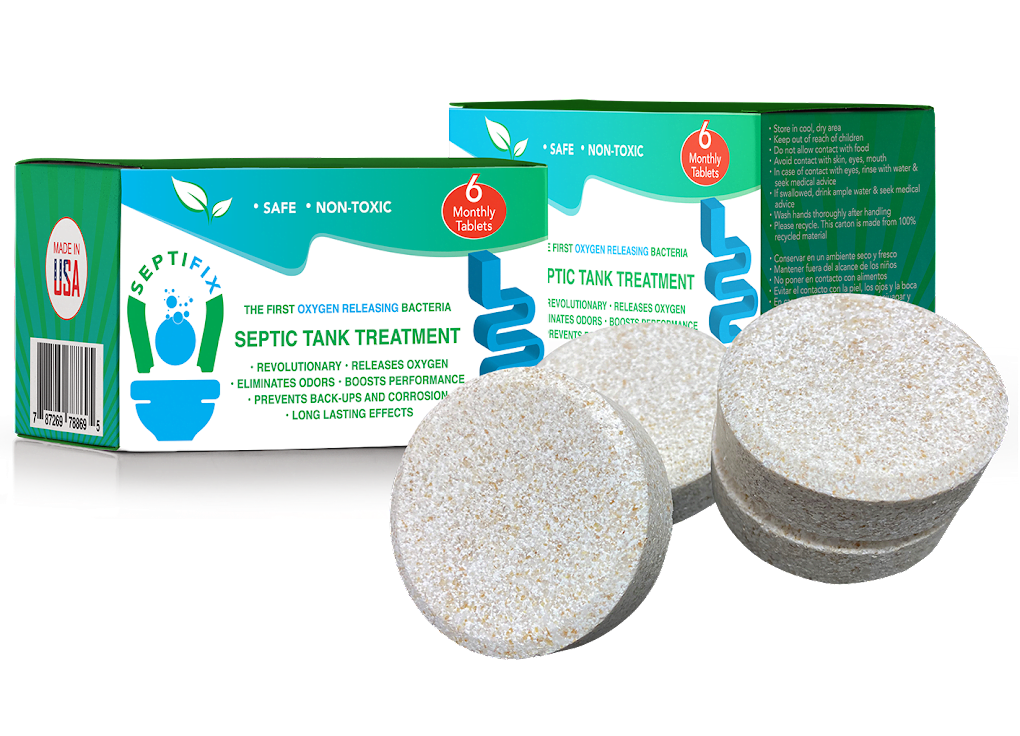
SEPTIFIX will save you hundreds, if not thousands of dollars each year, because your septic system will run smoothly and you won’t have to worry about calling the pumpers or a plumber for a fix!
Click here to save up to 50%