TL;DR – The Quick Facts to Save Your Lawn (And Wallet):
- The Reality: Rain doesn’t cause your septic system to fail; it exposes a system that is already choking.
- The Danger: That “rotten egg” smell is Hydrogen Sulfide gas. It means your drain field is completely waterlogged and pushing toxic gases to the surface.
- The $10,000 Mistake: Ignoring this smell leads to total drain field failure (biomat clogging), which costs between $3,000 and $10,000+ to replace.
- The Fix: You need to aggressively break down the solid waste in your tank before it reaches your yard using commercial-grade biological treatments.
The Invisible Ticking Time Bomb Under Your Grass You step outside after a heavy spring rainstorm. Instead of the fresh, crisp scent of wet earth and clean air, you are hit with a thick, suffocating wave of raw sewage. You check your shoes. You check the trash cans. But the smell is coming from the ground itself.
Most homeowners make a fatal mistake here: They blame the weather. They think, “It just rained a lot, the ground is wet, the smell will go away when it dries.”
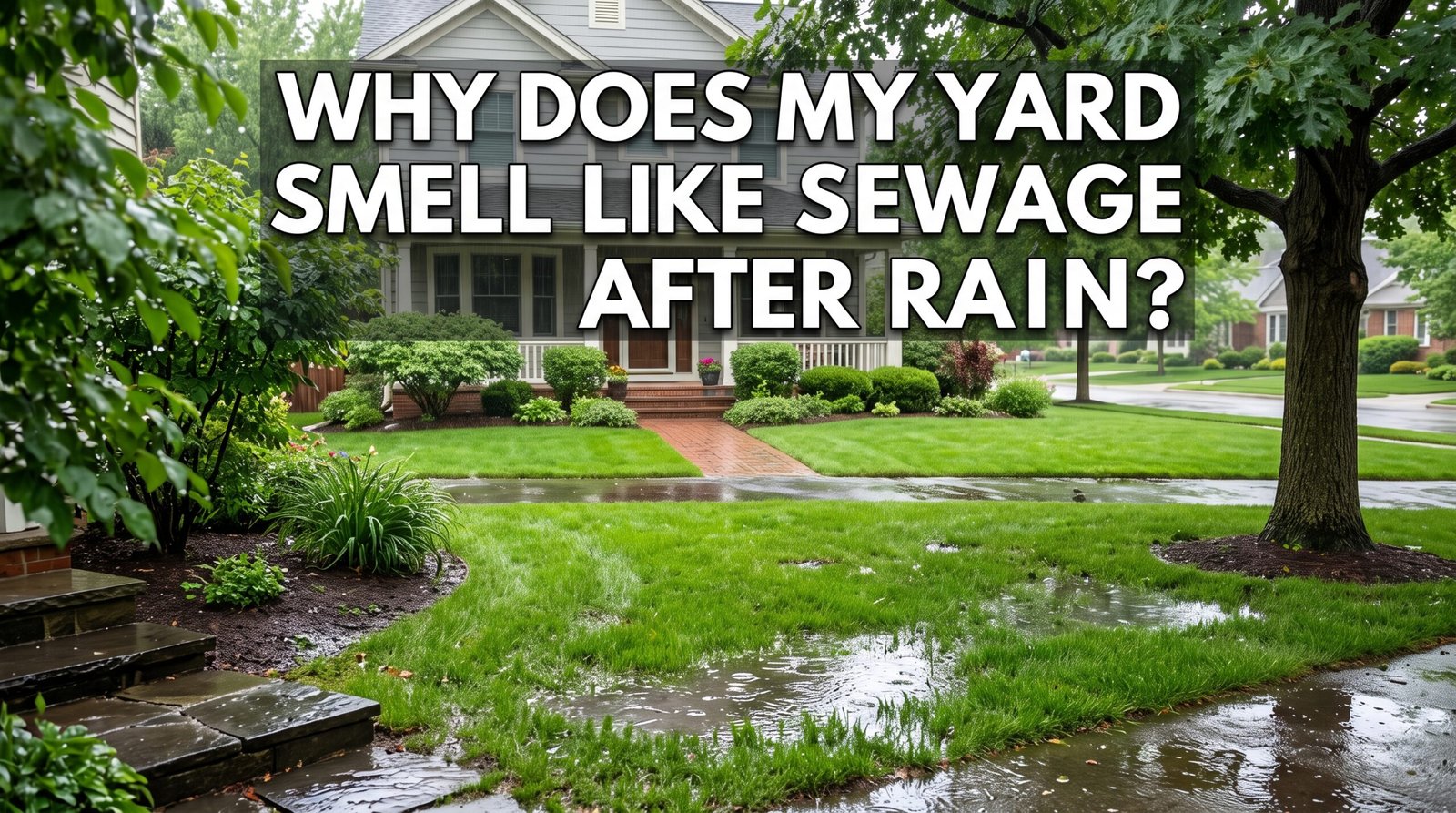
Here is the undeniable truth: A healthy septic system does not smell—not even in a hurricane. If your yard smells like a sewer after a rainstorm, your septic system is flashing a giant red warning light. It is suffocating, and if you don’t act quickly, you are walking straight into a $10,000 plumbing disaster.
The Science of the Stench: What is Actually Happening? To understand the smell, you need to understand the “Sponge Effect.”
Your drain field (or leach field) is a network of perforated pipes buried in a layer of gravel and soil. Its job is to act like a giant sponge, absorbing the liquid waste that flows out of your septic tank.
When it rains heavily, the soil absorbs the rainwater from the surface. If your drain field is already struggling or partially clogged with grease and sludge, the ground becomes completely saturated. There is simply no room left in the “sponge.”
Because the wastewater has nowhere to go, it begins to pool underground. As the water table rises, it acts like a piston, pushing trapped Hydrogen Sulfide gas (the toxic byproduct of decaying human waste) up through the wet soil and straight into your yard.
The 3 Real Causes of the “Rain Smell”
1. The Biomat Blockage (The Most Expensive Cause) Over time, a thick, slimy layer of bacteria and organic sludge—called a biomat—forms along the bottom of your drain field trenches. A thin biomat is normal. But if you haven’t been breaking down the solids in your tank properly, grease and raw waste escape the tank and make the biomat too thick. Water can no longer pass through it. When the rain comes, the system instantly overflows.
2. A Blocked Roof Vent (The “Burping” System) Every plumbing system has a vent pipe on the roof to release sewer gases safely into the upper atmosphere. If this pipe gets clogged by leaves, bird nests, or frost, the gases get trapped. When heavy rain forces water into your septic tank, the sudden pressure causes the tank to “burp” the trapped gas out of the easiest exit—usually the soil covering your tank lid or drain field.
3. Damaged or Missing Tank Lids Sometimes the fix is physical. Heavy rains can wash away the topsoil covering your septic tank lid. If the lid is cracked, poorly sealed, or made of decaying concrete, the rising hydrostatic pressure from the rain will force raw sewage gases right through the cracks.
How to Fix the Smell (Before the System Fails) If the smell is caused by a blocked vent or a cracked lid, a quick physical inspection and a $50 part can solve the problem.
But if the smell is coming from a struggling drain field (Cause #1), pumping the tank will not save you. Pumping only empties the tank; it does absolutely nothing to unclog the saturated soil in your yard.
To permanently banish the smell and save your drain field, you have to attack the root cause: you must restore the biological balance inside the tank.
The “Biological Army” Hack If your drain field is choking on sludge, you need to liquefy that sludge fast. This is where chemical cleaners fail and professional biology wins.
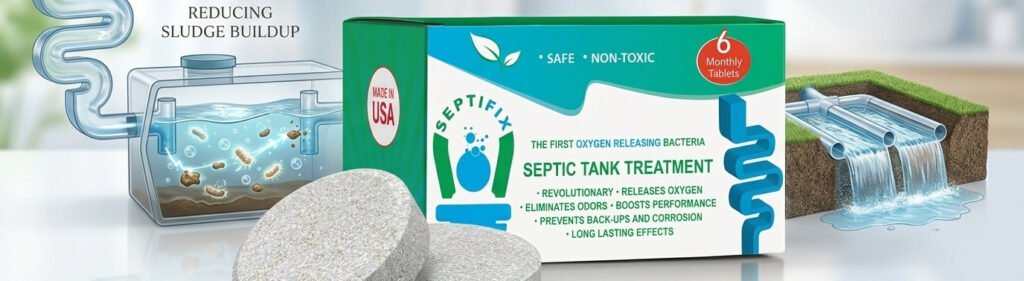
By flushing high-concentration, oxygen-releasing biological tablets—like Septifix—into your system, you are deploying an army of commercial-grade bacteria directly into your tank.
- First, they release massive amounts of oxygen, which instantly destroys the anaerobic bacteria causing that foul “rotten egg” smell.
- Second, these hungry microbes aggressively digest the grease, toilet paper, and solid waste inside the tank.
- Finally, the treated, bacteria-rich water flows out into your drain field, where it begins to literally “eat away” the clogged biomat, reopening the pores in the soil.
Don’t wait for the next rainstorm to see if the problem “fixed itself.” A sewage smell in your yard is your system begging for help. Introduce a professional biological treatment today, clear the clogs from the inside out, and protect your home from a massive repair bill.

SEPTIFIX will save you hundreds, if not thousands of dollars each year, because your septic system will run smoothly and you won’t have to worry about calling the pumpers or a plumber for a fix!
Click here to save up to 50%